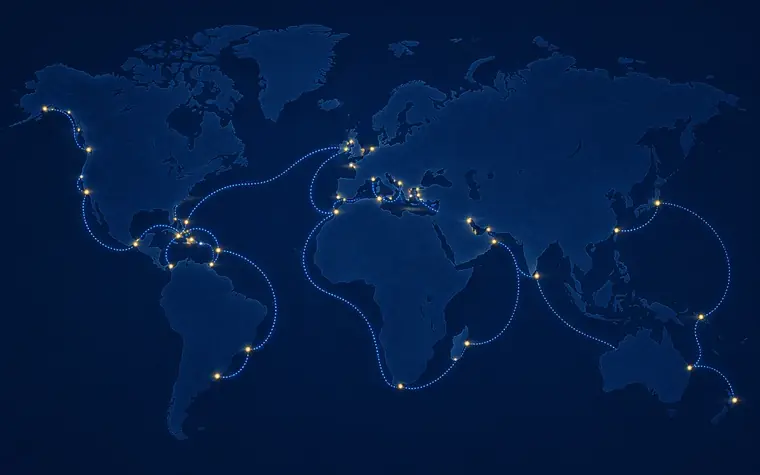
One system from departure to arrival


Every voyage is really a chain of handoffs. A vessel leaves port with a crew, a set of certifications, and a plan for how people will rotate on and off across the coming legs. By the time it arrives, dozens of those details have changed hands, often through email threads, spreadsheets, and side conversations that never make it back into any system of record. Each gap is small on its own. Together, they add up to the operational friction that quietly drains time from the people who can least afford to lose it.
The instinct is usually to add another tool for whatever hurts most this quarter: a rotation planner here, a certification tracker there, a shared document for handover notes. But stacking point solutions on top of one another rarely removes friction. It relocates it to the seams between them, where nobody owns the translation from one system to the next.
Where the friction actually lives
When we map how information moves across a voyage, the delays almost never sit inside a single task. They sit in the transitions. A rotation is approved but the certification check happens in a different tool, so nobody notices a lapsed endorsement until the crew member is already at the gangway. A handover is written by the outgoing officer but stored somewhere the incoming officer never looks. The work was done correctly at each step; the cost came from the space between the steps.
Unifying rotations, certifications, and handovers into one system does something deceptively simple: it lets each piece of information travel with the person it belongs to. A rotation that already knows which certifications are required cannot be scheduled against someone who lacks them. A handover that lives in the same place as the assignment is impossible to lose in transit.
- Rotations that validate certifications before an assignment is confirmed, not after.
- Handover notes attached to the leg and the role, so the next person inherits context automatically.
- A single record of who is qualified for what, updated once and trusted everywhere.
"Friction is rarely one broken step. It is the space between steps that no single tool was ever responsible for."
One record, many legs
The payoff of a unified system is not that any individual task gets dramatically faster. It is that the transitions stop being manual. When the same record follows a voyage from departure to arrival, the people running operations spend their attention on decisions rather than on reconciling four versions of the truth. Planners see conflicts before they become problems. Crew arrive knowing what they are stepping into.
That is the model CruiseControl is built around: not a collection of features bolted together, but one connected view of the workforce that holds from the moment a vessel leaves until the moment it returns. When rotations, certifications, and handovers share a single source of truth, the seams disappear, and with them most of the friction that everyone had quietly learned to accept.
Removing that friction does not require reinventing how a voyage is run. It requires making sure the information already being produced at every step actually reaches the next one intact. One system, followed end to end, is what makes that possible.
Arian shapes CruiseControl product strategy, keeping the platform focused on the problems maritime teams actually face.