Handovers that survive a crew change

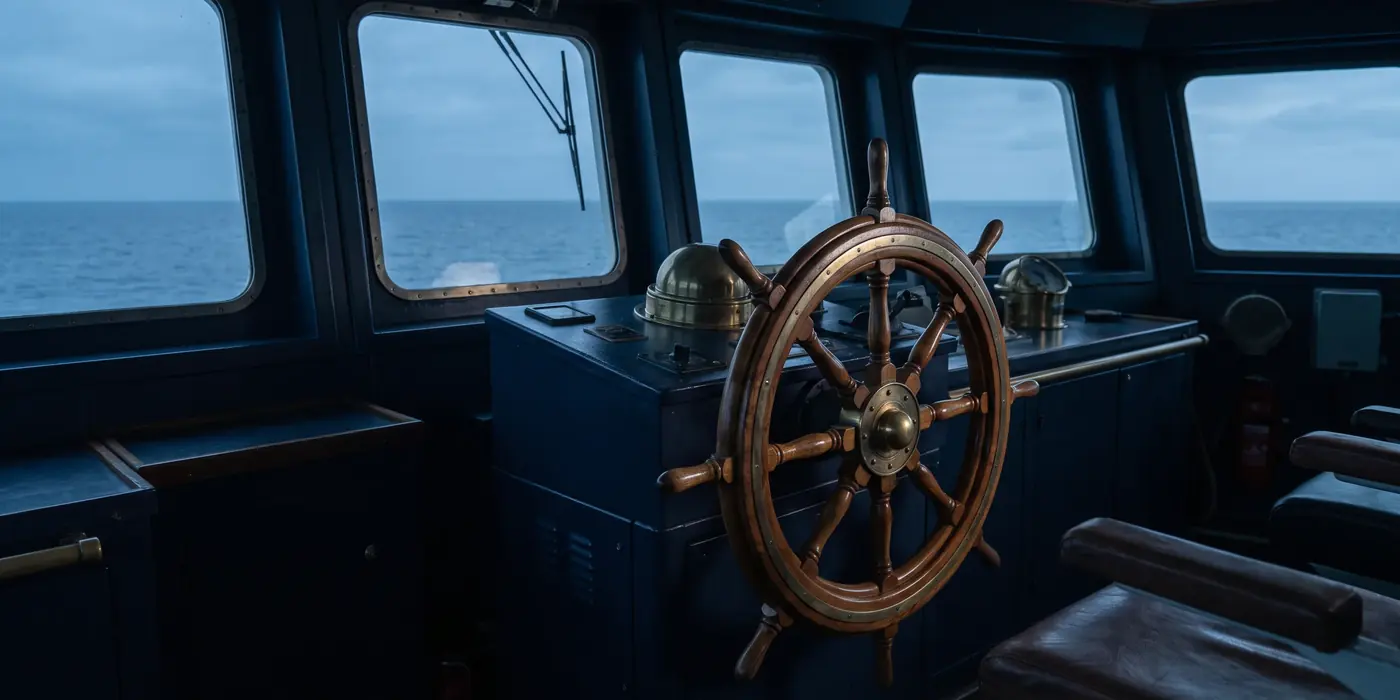
Every rotation ends the same way: one crew steps off, another steps on, and the ship keeps running as if nothing changed. The trouble is that everything the departing rotation knew (the half-finished tasks, the vendor still waiting on a callback, the quirk in a piece of equipment that never made it into a manual) walks down the gangway with them. A handover is the only bridge between those two crews, and when it is improvised it leaks.
CruiseControl treats the handover not as a courtesy note but as a structured deliverable. When continuity is designed rather than remembered, a crew change stops being a moment of risk and becomes just another scheduled event.
Why unstructured handovers fail
Left to habit, handovers depend on whoever happens to be on shift, how much time they have, and how good their memory is that day. Critical context gets compressed into a rushed conversation or a scrap of paper, and the incoming crew inherits gaps they will not discover until something goes wrong. The cost is rarely a single dramatic failure. It is the slow drip of rework, duplicated effort, and decisions made without the full picture.
- Open items disappear: tasks that were in progress but not yet logged have no owner once the shift ends.
- Context is lost: the reasoning behind a decision leaves with the person who made it.
- Accountability blurs: nobody is certain who was supposed to close the loop, so nobody does.
- Safety notes go stale: temporary workarounds and known risks are not carried forward.
"A crew change should transfer responsibility without transferring uncertainty: the ship never forgets what the last rotation knew."
A template that carries the weight
CruiseControl replaces the improvised note with a consistent handover structure that the outgoing rotation completes and the incoming rotation reviews. Because the same fields appear every time, both crews learn where to look and what to expect. Open tasks arrive with their status and next action attached. Outstanding follow-ups keep their owner. Equipment notes, safety observations, and pending approvals are recorded in the same place rather than scattered across memory and messaging apps.
The template does more than capture information: it forces completeness. A rotation cannot quietly skip the awkward item when the form asks for it directly, and the incoming crew signs off on what they have received. That mutual acknowledgment turns a handover into a genuine transfer of responsibility rather than a hopeful handshake.
Continuity as an operational habit
When every handover follows the same shape, patterns become visible across rotations. Recurring issues stop being rediscovered by each new crew and instead accumulate into shared operational knowledge. Managers ashore can see that the transition happened, what was outstanding, and who now owns it, without chasing anyone for a verbal update.
The goal is simple and demanding at once: the ship should run as though the crew never changed. With a structured handover built into CruiseControl, continuity stops depending on individual memory and starts living in the workflow, where the next rotation can always find it.
Raidel founded CruiseControl to bring maritime crew operations onto one connected platform, and still sets the product direction today.